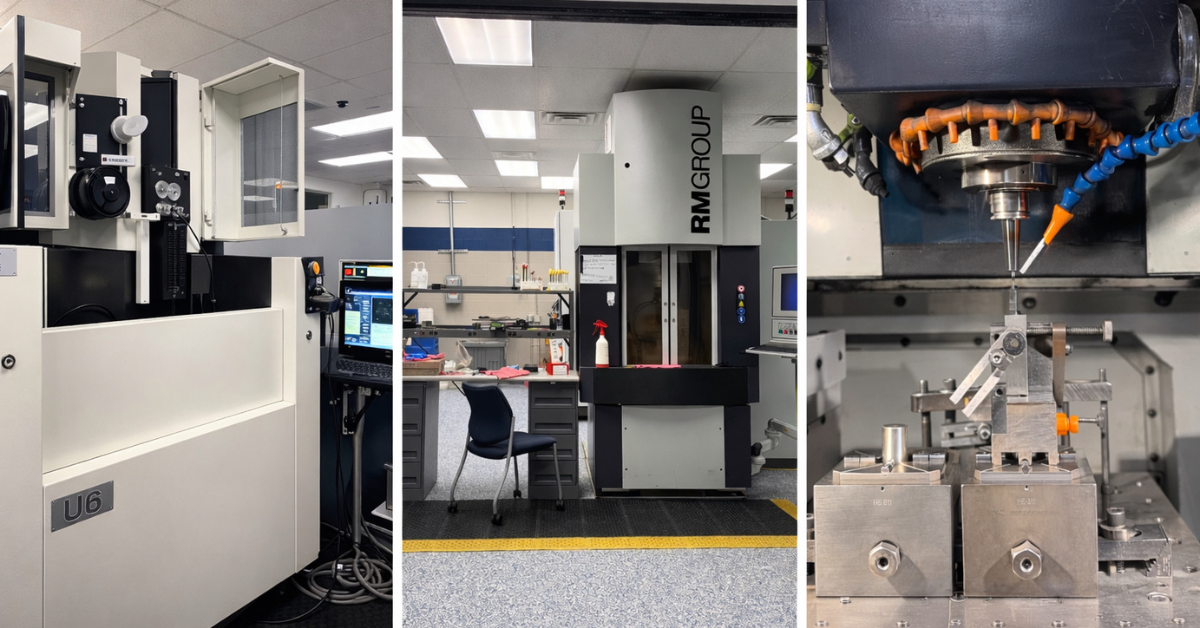
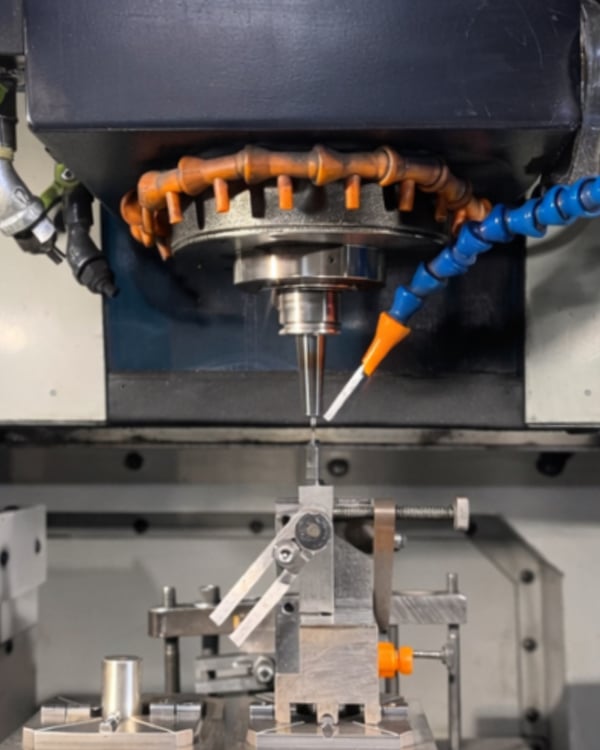
<img src="https://www.webtraxs.com/webtraxs.php?id=wt-2c3544fb-2492-42f9-a796-f1d71eaa6afe&amp;st=img" alt="">

A Beginner's Guide to Electrochemical Machining Services (ECM & PECM)

 ECM_ PECM

If you have ever struggled to machine hardened steels or superalloys with traditional CNC or EDM, you know the tradeoffs: rapid tool wear, heat-affected zones, residual stress, and endless hours spent deburring and polishing.

The ECM Difference

Electrochemical Machining (ECM) takes a different approach. Instead of cutting metal with force and heat, ECM uses electricity and chemistry to dissolve material in a controlled way—a process often described as “reverse electroplating.” Because it is a non-contact, non-thermal process, it delivers complex, burr-free features in the hardest and most demanding materials without compromising the integrity of the part.

Advanced PECM at JV Manufacturing

To push these benefits even further, JV Manufacturing utilizes Precision Electrochemical Machining (PECM), the next generation of precision technology developed by PEM Technologies.

By integrating PEMTec’s industry-leading precision into our workflow, JV offers a stress-free, highly repeatable alternative to traditional machining. This partnership allows engineering and sourcing teams to achieve stable manufacturing outcomes and high-tolerance results for even the most complex designs.

Download our ECM Guide to share with your team and reference offline.
  
Chapter I

What Is Electrochemical Machining (ECM)?

Electrochemical Machining is a non-traditional, non-contact, and non-thermal metal removal process. Unlike traditional CNC machining, which uses a sharp tool to force its way through metal, ECM utilizes controlled electrochemical reactions to dissolve material atom by atom.

How It Works

The ECM process relies on four primary components working together in a synchronized loop:

  • The Workpiece (Anode): This is the metal part being shaped, which is connected to a positive electrical charge (+).

  • The Tool (Cathode): This tool is machined to the inverse geometry of the desired part and is connected to a negative electrical charge (–).

  • The Electrolyte: A conductive fluid flows through the narrow gap between the tool and the workpiece to facilitate the reaction.

  • The Power Source: A high-current, low-voltage DC source drives the electrochemical reaction.
ECM PECM 1

The Reaction: When the electrical current flows, metal atoms on the workpiece surface lose electrons and enter the electrolyte solution as ions. These ions are subsequently carried away by the fluid and filtered out of the system. Because the tool never actually touches the part, there is zero mechanical stress introduced, and the material is removed in the exact negative of the tool’s shape.

ECM vs. EDM: What’s the Difference?

Many engineers initially associate ECM with Electrical Discharge Machining (EDM) because both processes use electricity to shape metal. However, the difference in the final result is significant:

Feature

EDM (Electrical Discharge Machining)

ECM (Electrochemical Machining)

Mechanism

Spark Erosion: This process removes metal using localized heat.

Anodic Dissolution: This process removes  metal using chemistry.

Surface Impact

This method creates a "recast layer" and heat-affected zones.

This method results in no heat-affected zones and no micro-cracking.

Post-Processing

EDM often requires post-process deburring or polishing.

ECM delivers burr-free features directly from the machine.


Because ECM is non-contact and non-thermal, it can machine extremely hard, tough materials without introducing residual stress. This makes it an essential solution for high-performance components in the aerospace, medical, automotive, and energy sectors.

The Evolution: Introducing PECM

In recent years, the technology has evolved into even more precise variants, most notably PECM (Precision Electrochemical Machining). By using a current and a microscopic working gap, PECM pushes resolution, surface finish, and repeatability far beyond conventional ECM capabilities.

At JV Manufacturing, we bring these next-generation outcomes to your projects through our advanced PEMTec PECM technology.

Want a breakdown? See our article The Electrochemical Machining Process: A Step-by-Step Guide

  
Chapter II

The Benefits of Electrochemical Machining Services

ECM is not just a different way to remove metal. When applied strategically, it transforms how you approach complexity, cost, and risk in your manufacturing programs.

ECM PECM 2 (1)

1. Burr-Free, High-Quality Surfaces

Because ECM dissolves material rather than tearing it, the process naturally produces burr-free edges and smooth surfaces. In many cases, ECM and PECM combine machining and finishing into a single step, which significantly reduces the need for secondary deburring, grinding, or polishing.

  • Fluid Handling: Precision edges and smooth internal passages improve flow and reduce turbulence in critical systems.

  • Medical & Aerospace: Burr-free features ensure patient safety and long-term part reliability.

  • The PECM Advantage: At JV Manufacturing, we leverage PECM’s current and ultra-small gaps to achieve superfinished surfaces on features where sealing, fatigue performance, or biocompatibility are essential.

2. No Heat-Affected Zone (HAZ) or Recast Layer

Thermal processes like EDM can leave behind a "recast layer"—a brittle surface with micro-cracks that must be removed to protect part life. ECM introduces no localized heat, meaning there is no HAZ and no recast layer to compromise the integrity of the metal.

For fatigue-critical and safety-critical parts—such as turbine components and medical implants—this preserves the material’s native properties and ensures long-term reliability.

3. Non-Contact Machining: Minimal Tool Wear

In ECM, the cathode never makes physical contact with the part. The geometry is defined by the shape of the tool and the electric field rather than a physical cutting edge.

  • Thin Walls: The absence of cutting forces means there is no deflection of thin or delicate features during machining.

  • Fragile Parts: This process eliminates the risk of "chatter" or mechanical damage on fragile components.

  • Consistent Precision: Part-to-part consistency can remain high across production runs, with cathode maintenance intervals determined by tolerance demands and process parameters.

This non-contact nature makes ECM and PECM particularly well-suited to high-volume production where consistent part-to-part precision is essential. In PEMTec-based PECM systems, this stability is designed directly into the machine architecture and pulse control.

4. Independence from Material Hardness

Material hardness has zero impact on the speed or quality of the ECM process. Hardened tool steels, nickel-based superalloys, and titanium can be machined with the same efficiency as soft aluminum.

This capability allows you to:

  • Machine parts in their final hardened condition to completely avoid heat-treat distortion.

  • Avoid the unpredictable tool costs and wear issues associated with CNC-cutting exotic alloys.

  • Unlock complex geometries, such as deep, narrow slots, that are impractical to create in hard materials using traditional methods.

PECM extends these advantages into even more challenging material sets, such as cemented carbides and advanced alloys with tight geometric requirements.

5. Reduced Total Cost at Scale

While ECM requires an upfront investment in cathode design, it often delivers the lowest Total Cost of Ownership (TCO) for high-volume programs:

  • Eliminates Rework: The process reduces the need for secondary operations and extensive inspections.

  • Reduces Scrap: It eliminates the risk of scrap caused by distortion, HAZ-related failures, or deburring issues.

  • Predictable Cycles: Once the process is optimized, it provides stable cycle times and significantly lower tool maintenance costs.

For the right combination of geometry, material, and volume, ECM and PECM become strategic levers for your business—not just specialty processes.

  
Chapter III

How Does Electrochemical Machining Work?

If you are used to seeing chips flying off a CNC mill, ECM can feel a bit like magic. In practice, it follows a disciplined, repeatable engineering sequence. At JV Manufacturing, we break the process down into four critical stages of execution.

Step 1: Tooling and Cathode Engineering

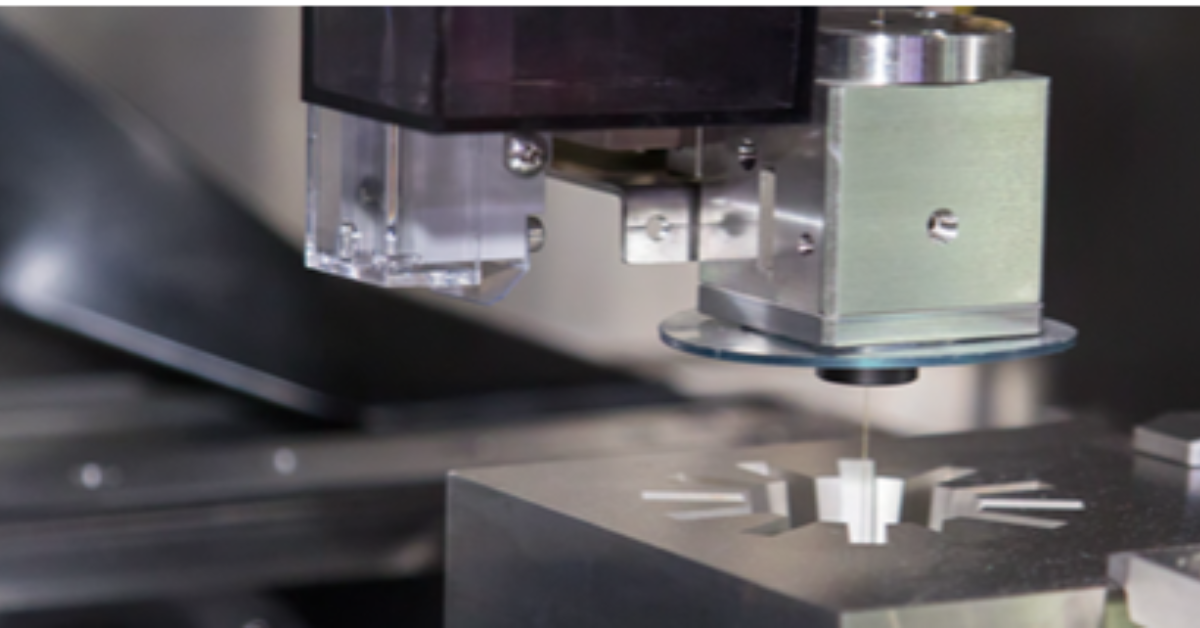
Every project begins with the "Negative". Because ECM is a non-contact process, the tool (the cathode) does not need to be harder than the part, but it must be perfectly engineered.

  • Cathode Design: JV engineers design a custom cathode that acts as a mirror image of your finished part geometry.

  • Material Selection: Your part acts as the anode and must be electrically conductive; stainless steel, titanium, and nickel-based superalloys are all ideal candidates.

  • Precision Alignment: Our team establishes a narrow inter-electrode gap where the tool sits microns away from the part without making physical contact.

  • In-House Expertise: JV’s toolmakers and engineers collaborate from the start to align cathode design with fixturing and electrolyte flow.

This rigorous design phase ensures that the electric field is perfectly shaped to dissolve material exactly where your design requires it.
HOW DOES ECM WORK


Step 2: Electrolyte Management (The "Invisible Cut")

Once the setup is staged, a conductive electrolyte—typically a water-based salt solution—is pumped through the gap between the tool and the workpiece. This fluid performs three vital tasks:

  • Electrical Conduit: The electrolyte conducts the electrical current between the cathode and the anode.

  • Thermal Stability: The fluid removes heat generated by the current to keep the entire process thermally stable.

  • Debris Removal: It flushes away dissolved metal reaction products, known as sludge, so they do not accumulate and interfere with the machining.

Because there is no mechanical contact, the first part and the thousandth part see nearly identical electrochemical conditions, meaning there is effectively zero tool wear.

Step 3: The Reaction – Where PECM Comes In
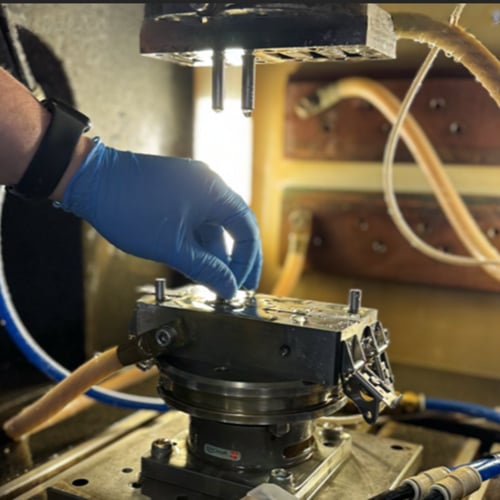
Step 3 The Reaction

With the components in place, a power source drives the reaction, dissolving metal atoms in a controlled way. At JV, we refine this further using Precision Electrochemical Machining (PECM).

  • Precision Power: High-current, low-voltage pulses allow the gap to “reset” between cycles, which significantly improves surface finish and stability.

  • Oscillating Motion: The tool actually oscillates to tighten the working gap and enhance electrolyte exchange, enabling finer details and deeper cavities.

  • Industrial-Grade Precision: Our PECM capability is built on PEMTec technology, using industrial machines designed specifically for high-precision serial production.

  • Solutions-Oriented: While some focus only on the equipment, JV provides the complete solution—configuring the PEMTec platform with our own custom cathodes and process recipes.

By combining PEMTec’s hardware with JV’s in-house tooling expertise, we move beyond simple metal removal to deliver a highly controlled, industrial-grade manufacturing solution.


Step 4: The Result – Finished, Stress-Free Parts

As the process concludes, the dissolved metal is carried away as sludge rather than jagged chips.

  • Smooth Surfaces: The surface is formed by controlled dissolution, resulting in a burr-free, smooth finish.

  • Microstructure Integrity: Because the process is non-thermal, the part preserves its base microstructure and remains free of residual stress.

  • Assembly Ready: Most components emerge “ready-for-assembly,” requiring little to no additional finishing.

This unique combination of chemical precision and mechanical stability allows us to tackle geometries that are simply impossible for traditional machining methods. In the next section, we will compare ECM directly to CNC and EDM to help you determine which process is the best fit for your specific requirements.

  
Chapter IV

ECM vs. EDM vs. CNC: Which Process Is Right for You?

Electrochemical Machining is a powerful tool, but it is not intended to replace every machining method. The most effective manufacturing programs utilize ECM and PECM alongside EDM and CNC, selecting the optimal process based on specific part features and production volumes.


ECM vs. EDM

Electrical Discharge Machining (EDM) removes material using electrical sparks that melt and vaporize small pockets of metal.

EDM excels at:

  • Sharp Geometry: The process is ideal for producing perfectly sharp internal corners.

  • Intricate Profiles: It machines complex profiles in hard, conductive materials with high precision.

  • Low-Volume Production: EDM is well-suited for low-volume prototyping and specialized tooling work.

EDM’s tradeoffs include:

  • Thermal Impact: The process generates a heat-affected zone and a brittle recast layer.

  • Surface Risks: Spark erosion may introduce micro-cracks or surface damage in fatigue-critical parts.

  • Secondary Finishing: Parts often require post-process grinding or polishing to achieve the final finish.

ECM and PECM offer distinct advantages:

  • Chemical Dissolution: ECM removes material via electrochemical dissolution rather than heat, resulting in zero thermal damage.

  • Edge Quality: The process leaves burr-free surfaces with gentle radii instead of sharp, stress-prone corners.

  • Tool Stability: ECM maintains stable tool geometry with virtually no wear, ensuring consistency over time.

  • PECM Precision: A current adds the ability to create finer features, tighter tolerances, and superfinished surfaces.

Choose EDM when you require sharp internal corners at low volumes. Choose ECM or PECM when surface integrity, fatigue performance, and consistent high-volume production are your primary goals.

ECM vs. CNC Machining

CNC machining remains the primary choice for many standard components across the industry.

CNC excels at:

  • Flexibility: It is the standard for machining simple to moderately complex geometries.

  • Quick-Turn Runs: CNC is ideal for rapid prototyping and low- to medium-volume production runs.

  • Material Versatility: It works with a wide range of materials using widely available equipment.

CNC’s challenges include:

  • Mechanical Stress: Hard or abrasive materials cause significant tool wear and "chatter".

  • Part Distortion: Cutting forces can cause deflection on thin walls or delicate features.

  • Manual Deburring: Complex parts often require significant secondary deburring and finishing.

ECM and PECM are superior alternatives when:

  • Challenging Materials: You are machining tough alloys such as nickel superalloys or hardened tool steels.

  • Delicate Geometries: Your design includes thin walls or fragile features prone to mechanical distortion.

  • Complex Intersections: The part has many intersecting edges or internal passages that are prone to burrs.

  • Scale and Efficiency: You are working at volumes where predictable cycle times and reduced secondary operations provide a higher return on investment.

When ECM Is Not the Right Choice

There are specific situations where ECM or PECM may not be the optimal fit for your project:

  • Non-Conductive Materials: The process cannot machine parts that are not electrically conductive, such as plastics, ceramics, or glass.

  • Extremely Low Volumes: Very low volumes may not justify the non-recurring engineering (NRE) costs required for custom cathode development.

  • Sharp Internal Radii: If your geometry demands perfectly sharp internal corners that cannot be radiused, other methods are required.

  • Economic Simplicity: If a conventional process can achieve your requirements more economically, it remains the better choice.

JV’s role is to help you navigate these choices. We assist you in deciding where ECM or PECM makes the most sense—and where EDM, CNC, or other methods are the better option for your specific program.

For a more detailed discussion, see our article ECM vs. EDM Machining.

  
Chapter V

ECM & PECM Applications and Industries We Serve

ECM and PECM are ideally suited for industries where part failure is not an option and where material and geometry push traditional machining to its limits.

Aerospace & Defense

In the aerospace sector, manufacturers must often contend with extreme heat and high-stress environments that demand uncompromising material integrity.

Typical components include:

  • Turbine blades and vanes

  • Blisks (bladed integrated disks)

  • Fuel nozzles and diffusers

  • Internal cooling passages and complex flow paths

Why Choose ECM / PECM?:

Thermal Protection: The process machines nickel-based superalloys and other advanced alloys without introducing heat damage or residual stress.

Enhanced Flow: It produces smooth, radiused internal features that improve fluid flow and reduce stress concentrations.

Structural Integrity: The non-contact nature enables thin-wall, lightweight designs that would be at high risk of distortion under traditional cutting forces.

Serial Production: With PECM and PEMTec technology, JV delivers superfinished flow paths and highly repeatable micro-features for large-scale production runs.

Explore more in our article Aerospace Electrochemical Machining Process.

Medical Devices

For medical applications, surface finish and biocompatibility are paramount to ensuring patient safety and device performance.

Typical components include:

  • Implants: This includes stents, vascular implants, and various orthopedic components.

  • Instrumentation: ECM is ideal for surgical instruments, cutting tools, and micro-features on minimally invasive devices.

Why ECM / PECM is the choice for the Medical Industry:

  • Patient Safety: The process creates burr-free edges and smooth surfaces that protect tissue and reduce irritation.

  • Biocompatibility: Because there is no recast layer, the material’s surface integrity and biocompatibility are fully preserved.

  • Micro-Scale Precision: It provides the ability to form complex micro-geometries that are difficult or impossible to achieve through mechanical means.

  • Consistency: PECM’s tight gap and pulsed current enable consistent high-quality surfaces on critical patient-contact areas

Automotive and Mobility

Modern automotive systems require high-volume consistency and the ability to work with extremely wear-resistant materials.

Typical components include:

  • Fuel & Hydraulics: This includes fuel injection components, valve plates, and hydraulic control elements .
  • Thermal Management: ECM is frequently used for heat exchanger plates and complex cooling channels.

Why ECM / PECM is the best choice:

  • Efficiency: Radiused edges and smooth channels improve fluid flow and significantly reduce pressure losses.

  • Hard Material Capability: The process easily machines the hardened, wear-resistant materials used in modern powertrains.

  • High-Volume Stability: The technology is a strong fit for mass production where cycle time and consistency are critical—areas where PEMTec PECM systems excel.

Energy and Advanced Industrial Equipment

In the energy sector, components must withstand high pressures and temperatures over long service lives.

In energy and industrial sectors, ECM and PECM support:

  • Power Generation: This includes turbomachinery components and specialized flow control hardware.

  • Critical Connections: ECM is used for high-pressure, high-temperature connectors and internal passages.

These applications demand robust fatigue performance, tight tolerances, and reliable surface integrity—strengths that define our industrial-grade PEMTec PECM technology.

For additional examples, see our blog on Common Electrochemical Machining Applications.
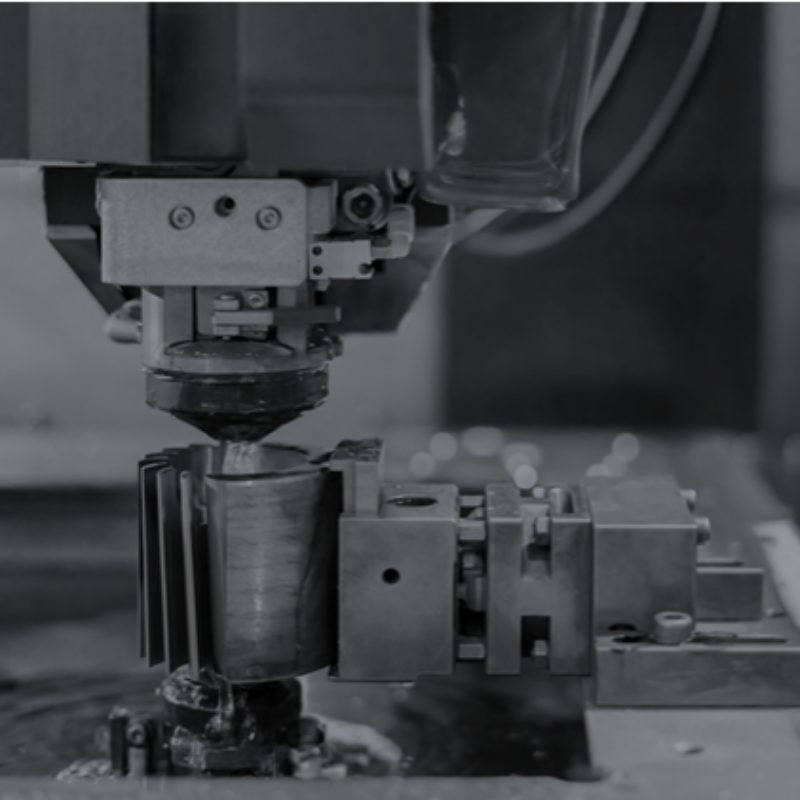
Energy and Advanced Industrial Equipment


Chapter VI

Designing for ECM: DFM Guidelines, Materials, and Tolerances

To get the most value from ECM and PECM, it helps to design with the processes in mind. This section outlines practical guidelines your engineering team can use as a starting point.

Geometric Guidelines

Corner radii and edges

ECM naturally favors smooth transitions and radiused edges. Perfectly sharp internal corners are not realistic and generally point to EDM or other methods.

  • Specify minimum internal radii instead of sharp internal corners whenever possible.

  • Use radiused edges to improve fluid flow and reduce stress concentrations—benefits that align with ECM and PECM strengths.

Aspect ratios and deep features

ECM and PECM are well suited to deep cavities and narrow internal passages, particularly where mechanical drills or mills would struggle.

  • Deep cooling channels, fuel passages, and internal manifolds are strong candidates.

  • Designing for stable electrolyte flow paths helps avoid stagnation and ensures consistent removal.

Thin walls and delicate features

With no cutting forces, ECM and PECM do not bend or deflect thin walls the way mechanical machining can.

  • Thin features that are risky under mechanical load can often be produced reliably with ECM / PECM.

  • Work with JV early to confirm minimum wall thickness and gap requirements for your specific part.

Feature Access and Internal Geometries

ECM requires an access path for both the cathode and the electrolyte.

  • Consider “line-of-sight” access from the perspective of the tool and the fluid.

  • For fully enclosed geometries, design for access from one or both ends or consider splitting operations into multiple stages.

  • ECM is particularly effective for internal deburring and finishing in locations that are out of reach for manual tools.

PECM applies the same principles but with a tighter working gap, which makes fixturing and access design even more important—another area where JV’s experience and PEMTec’s machine design work together.

Material Selection

In all cases, the workpiece must be electrically conductive.

Well-suited materials include:

  • Nickel-based superalloys (e.g., Inconel, Hastelloy)

  • Titanium and titanium alloys

  • Stainless steels (including high-strength grades)

  • Tool steels and high-speed steels

  • Copper and copper alloys

  • Certain hard and magnetic alloys, depending on application

Generally not suitable:

  • Plastics and polymers

  • Glass, ceramics, and non-conductive composites

  • Non-conductive coatings in the machining zone

If you are unsure about a specific alloy or heat treatment condition, JV can help evaluate ECM and PECM compatibility during a feasibility review.

Surface Finish and Tolerances (1)

Surface Finish and Tolerances

Standard ECM produces high-quality surfaces suitable for many aerospace, medical, and industrial applications. PECM goes further by enabling superfinished surfaces and micron-level control.

Surface finish

  • Standard ECM delivers a smooth, burr-free surface.

  • PECM can approach electropolished finishes, often eliminating secondary polishing on critical surfaces.

Tolerances

  • Standard ECM supports typical production tolerances for many precision parts.

  • PECM enables tighter tolerances when small features or high-precision interfaces are critical—especially when leveraging PEMTec’s precision PECM machines.

Engaging JV early helps ensure your drawings align with ECM / PECM capabilities—avoiding over-specification that drives up cost or under-specification that compromises performance.

  
Chapter VII

Quality Assurance and Process Control in ECM

Precision in ECM and PECM depends on a combination of sound electrochemistry and disciplined process control. JV Manufacturing integrates these specialized processes within the same rigorous quality framework that supports our high-precision die manufacturing and production machining operations.

Process Design and Validation

  • Engineering Collaboration: We collaborate closely with your engineering team to fully understand functional requirements and identify all critical part features.

  • Custom Development: Our team designs and manufactures custom cathodes and fixtures entirely in-house to maintain total control over the process geometry.

  • Controlled Trials: We conduct intensive trials on representative parts or coupons to establish the optimal process baseline.

  • Performance Validation: We validate the surface finish, dimensional accuracy, and feature integrity against your exact specifications.

This upfront investment in development helps reduce program risk, shorten ramp-up times, and support long-term repeatability.

In-Process Controls

Maintaining the microscopic "working gap" required for precision machining requires constant monitoring of several key variables:

  • Electrolyte Management: We continuously monitor the temperature, conductivity, and chemical concentration of the electrolyte.

  • Debris Filtration: Our systems actively filter and remove metal sludge to keep the inter-electrode gap clean and consistent.

  • Power Parameters: For PECM, we precisely tune the current, voltage, and pulse characteristics to avoid instability or overcutting.

  • Automated Monitoring: The PEMTec PECM platform provides the fine control and real-time monitoring required for this level of industrial precision.

PEMTec’s PECM machine platform provides the fine control and monitoring required for this level of precision; JV’s team configures and manages those capabilities for your specific program.

Inspection and Certification

All ECM and PECM components are inspected using methods specifically selected for the application:

  • Metrology: We utilize Coordinate Measuring Machines (CMM) and custom gauge fixtures for rigorous dimensional inspection.

  • Surface Analysis: Our team performs detailed surface roughness measurements on all critical sealing or flow surfaces.

  • Microscopic Review: We conduct visual and microscopic inspections of edges, radii, and micro-features to ensure they are burr-free.

JV Manufacturing is ISO 9001:2015 certified, and all ECM/PECM processes are fully integrated into this globally recognized quality system. For more information, visit our Certifications page.

  
Chapter VIII

JVM’s PECM Ecosystem: Powering Industrial Solutions with PEMTec

ECM and PECM are most effective when they are treated as strategic components of a broader manufacturing strategy rather than isolated steps . JV’s primary value lies in our ability to combine PEMTec-based PECM with in-house tooling, stamping, and finishing under one roof.

In-House Cathode and Tool Manufacturing

The performance of any ECM or PECM process is fundamentally tied to the quality of the cathode.

  • Integrated Engineering: Our toolmakers and ECM engineers collaborate during the concept phase to align tool geometry and electrolyte flow with your part requirements.

  • Rapid Iteration: Because we design and build our own cathodes, any necessary design changes are handled internally, which significantly reduces lead times.

  • Seamless Transition: This internal coordination ensures that the tooling used in validation is perfectly optimized for the final production environment.

Multi-Process Integration

Many complex parts require a sequence of different manufacturing methods to reach their finished state:

  • Primary Machining: We utilize CNC machining or turning for high-volume stock removal and external feature creation.

  • Precision Finishing: We apply ECM or PECM for internal passages, complex deburring, and the finishing of burr-prone areas.

  • Complementary Methods: We incorporate EDM, grinding, and specialized assembly where they make the most sense for specific part features.

By coordinating these capabilities within a single organization, you benefit from a unified quality system, faster problem-solving, and a simplified supply chain.

Powered by PEMTec Solutions

While some organizations focus only on selling equipment, JV focuses on delivering complete manufacturing solutions. We work directly within the PEMTec ecosystem to apply their world-leading PECM machine capabilities to your specific industrial challenges. This combination of PEMTec hardware and JV’s process expertise allows us to support both advanced development and long-term production programs.

Explore our broader capabilities on our Tool & Die Manufacturing page.

  
Chapter IX

Getting Started with ECM: What to Expect

If ECM or PECM are new to your organization, understanding the engagement process can make your first project smoother and less risky.

Step 1: Feasibility Review

The process begins with a comprehensive technical evaluation of your program :

  • Technical Audit: We review your 3D models, material specifications, and heat treatment conditions.

  • Production Planning: Our team evaluates your annual volume targets and current manufacturing challenges.

  • Process Selection: We determine whether ECM, PECM, or a hybrid approach is the strongest fit for your specific part features.

Step 2: Tooling and Process Development

Once feasibility is confirmed, we move into the active development phase:

  • Custom Build: We design and manufacture the custom cathodes and fixtures required for your project.

  • Recipe Optimization: Our engineers establish and refine the exact process parameters needed for repeatable results.

  • Pilot Production: We run pilot parts to confirm that all surface finishes and tolerances meet your requirements.

Step 3: Production Ramp-Up

After the process is validated, we move to stabilize the production environment:

  • Scaling: We scale operations from pilot runs to full-scale serial production.

  • Quality Lock: Our team locks in final inspection plans and control points to ensure ongoing compliance.

  • Logistics Coordination: We manage the scheduling and packaging required to support your build plan.

The final outcome is a documented, repeatable ECM or PECM process that your team can rely on for the entire life of the program. If you are evaluating ECM or PECM for an active or upcoming project, reach out through our Contact page to schedule a feasibility discussion.

  
Chapter X

Leave Your Mark with Stress-Free Precision

Electrochemical Machining is more than a specialty process; for the right parts and programs, especially when combined with PECM, it is a strategic manufacturing capability. By choosing this technology, you unlock possibilities that traditional methods simply cannot reach.

  • Design Freedom: ECM enables complex internal passages, thin walls, and intricate features that are difficult or impossible to achieve with traditional machining alone.

  • Material Protection: The process protects the integrity of high-performance materials by completely eliminating heat-affected zones and mechanical stresses.

  • Economic Value: It reduces total program cost and risk by minimizing secondary operations, rework, and scrap rates.

At JV Manufacturing, ECM and PEMTec-based PECM are part of a broader, full-service ecosystem that includes in-house tooling, high-speed stamping, and production machining. As a family-owned manufacturer with decades of experience, we bring both technical depth and a spirit of long-term partnership to every engagement.

  
Chapter XI

FAQS: PECM & PEMTec at JV Manufacturing

What is PECM and how is it different from standard ECM?

PECM stands for Precision Electrochemical Machining. It is an advanced form of ECM that uses a very small working gap, pulsed current, and an often-oscillating tool to achieve extremely fine detail, tight tolerances, and superfinished surfaces.

Like ECM, PECM is non-contact and non-thermal: material is removed by controlled electrochemical dissolution in an electrolyte, not by cutting or sparking. The difference is that PECM’s pulse control and gap management allow higher accuracy and better surface finish than conventional ECM.

When should I consider PECM instead of ECM?

You should consider PECM when:

  • You need tighter tolerances (often in the single-digit micron range, depending on part design and setup).
  • Surface finish is critical: e.g., sealing faces, flow surfaces, or patient-contact surfaces that benefit from Ra ~0.03–0.05 µm.
  • Your part has very fine features or micro-geometry that would be difficult to machine, deburr, or polish mechanically.
  • You’re working with extremely hard or difficult materials (superalloys, cemented carbides) in a production environment where consistency matters.

In practice, JV will often evaluate both ECM and PECM options during feasibility and recommend the process—or combination of processes—that best fits your design, material, and volume.

What role does PEMTec play in JVM?

PEMTec is an engineering company that specializes in precise electrochemical metal processing and has developed PECM technology (“Pemming”) into an industrial standard ready for mass production.

JV’s PECM capability is built on PEMTec’s machine platform and core components (such as PEMMechanic, PEMControl, PEMPower, and PEMAqua), which are designed specifically for precision, repeatable PECM machining in serial production.

JV combines that PEMTec hardware and control with our own cathode design, fixturing, process development, and quality systems to deliver solutions, not just machine capacity.

How does PECM with PEMTec technology support serial production?

PEMTec’s PECM machines are designed for precision in series—they’re built to make high-precision parts in production, not just lab samples. The platform emphasizes:

  • Stable, repeatable control of current, pulse parameters, and gap.
  • Integrated power electronics and generator technology sized for production.
  • Machine architectures and electrolyte systems that support consistent removal across many parts.

With JV running those machines, you get:

  • Production-ready PECM process windows tuned to your part.
  • In-house cathode and fixture design for fast iteration.
  • Integration with upstream and downstream processes (CNC, stamping, assembly) to support full serial production.
What types of parts are good candidates for PECM with PEMTec?

Good PECM candidates include:

  • Aerospace components like blisks, turbine blades, and cooling features that require superalloys, precision flow paths, and stress-free surfaces.
  • Medical components such as implants and surgical tools where micro-geometry, edge quality, and surface finish directly affect performance and patient safety.
  • Automotive and energy parts like valve plates, injection components, and flow-control elements where burr-free edges and low-pressure losses are essential at volume.
  • Hard / difficult materials, including nickel-based superalloys, hardened steels, and cemented carbides, especially where conventional machining leads to tool wear, heat damage, or inconsistent quality.

JV will typically validate PECM suitability during a design review and may recommend starting with a small pilot to quantify benefits.

How is PEMTec different from other PECM machine suppliers?

PEMTec’s focus is on precise electrochemical metal machining and continuous PECM innovation. They’ve:

  • Developed PECM technology to an industrial standard suitable for mass production.
  • Built a network of PEM Application Centers and sales partners worldwide to support process optimization, tooling, and sample processing.

JV’s advantage is that we are not just a machine seller or demonstration lab—we use PEMTec PECM machines as part of a complete manufacturing ecosystem that includes tooling, ECM, CNC, EDM, stamping, and assembly.

What information does JV need to evaluate whether PECM is right for my part?

For a PECM (or ECM) feasibility review, JV typically needs:

  • 2D drawings and/or 3D models of the part.
  • Material and heat-treatment information.
  • Target tolerances and surface finish requirements, especially for critical surfaces.
  • Annual volumes and batch sizes.
  • Any current manufacturing challenges (e.g., deburring issues, fatigue failures, tool wear, scrap rates).

From there, we can help you determine:

  • Whether ECM, PECM, or a hybrid process makes sense.
  • Which features should be targeted by PECM.
  • Expected benefits in surface quality, reliability, and total cost.

Ready to explore whether ECM or PECM is the right solution for your components?